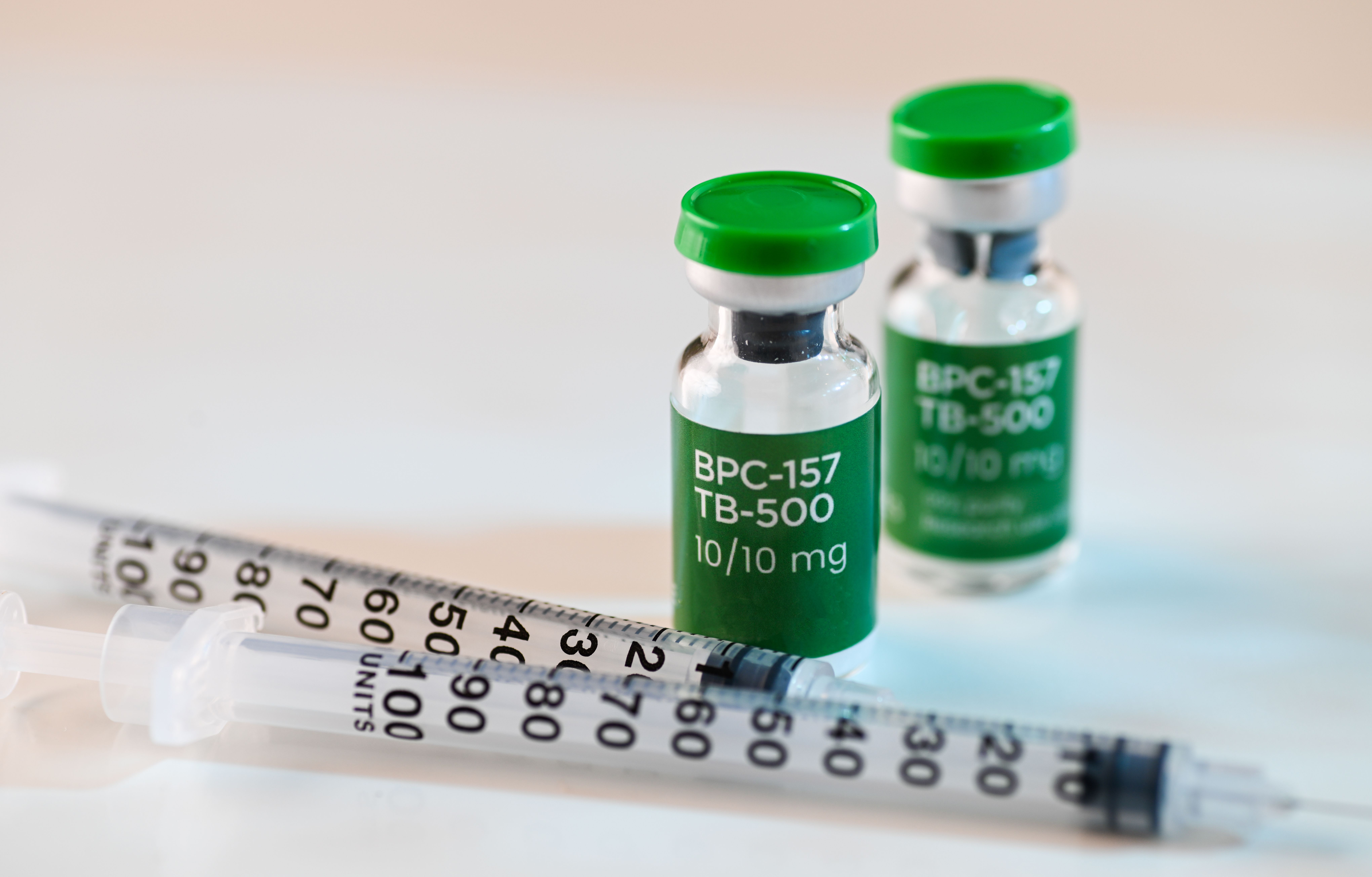
Growth hormone releasing peptides, IGF-1 variants, and other compounds address tissue repair through additional mechanisms
Science 295:10111011 Pevec D, Novinscak T, Brcic L, Sipos K, Jukic I, Staresinic M, Mise S, Brcic I, Kolenc D, Klicek R, Banic T (2010) Impact of pentadecapeptide BPC 157 on muscle healing impaired by systemic corticosteroid application
Researchers often study BPC 157 and TB 500 alongside growth hormone secretagogues such as CJC-1295 and Ipamorelin, growth hormone-releasing hormone analogues like Tesamorelin and Sermorelin, and IGF-1 pathway compounds like IGF-1 LR3 each offering complementary insights into anabolic, regenerative, and metabolic signaling
Tesamorelin: ~26-38 minute half-life, daily, FDA-approved for HIV-associated lipodystrophy
Best combined with BPC-157: TB-500 and BPC-157 are mechanistically complementary
Cannabinoids exert their action on the human body by binding to the receptors that make up the endocannabinoid system, namely CB1 and CB2 receptors